
Written by Olúwabùnmi Adéníji
Have you ever wondered how people with more than one tribe try to balance out the cultural differences in their lives? Well, the truth is, they just learn to make them coexist. It’s the same way someone who is officially from Ghana and works in Nigeria will incorporate into their day-to-day Nigerian realities, while maintaining their Ghanaian heritage.
Being a Christian works the same way. Maybe even takes it a step further by allowing our heavenly citizenship to influence our earthly nationality. Philippians 3:20 assures us of our heavenly citizenship and we understand that with citizenship comes duties and obligations.
Fulfilling our heavenly duties and obligations is as important as fulfilling that of our country’s, Nigeria. And it is important that we live out that reality also, in our daily lives. That’s why the Bible says in Genesis 1:27 “So God created mankind in his own image, in the image of God he created them; male and female he created them.” When we live out our heavenly identity, we walk around advertising God’s image. When we feel torn apart concerning a situation, our realities as Christians give us wisdom on how to navigate through it.
Have you ever been torn apart between paying your tithe and tax, and decided to forfeit one for the other? In Matthew 17, Jesus also found himself in an almost similar situation, and He did not compromise standards. Beat your chest and say “If Jesus can, I can.”
There are demands to dual citizenship, and as much as there is room for improvement, there’s also room for repentance. The same way Jesus revealed himself to His disciples, the Holy Spirit reveals all things to us. Walking with the Holy Spirit reveals you to you, and helps you become a better citizen.
See yourself in the light of Jesus and handle situations with wisdom, becoming a better citizen of God’s kingdom.
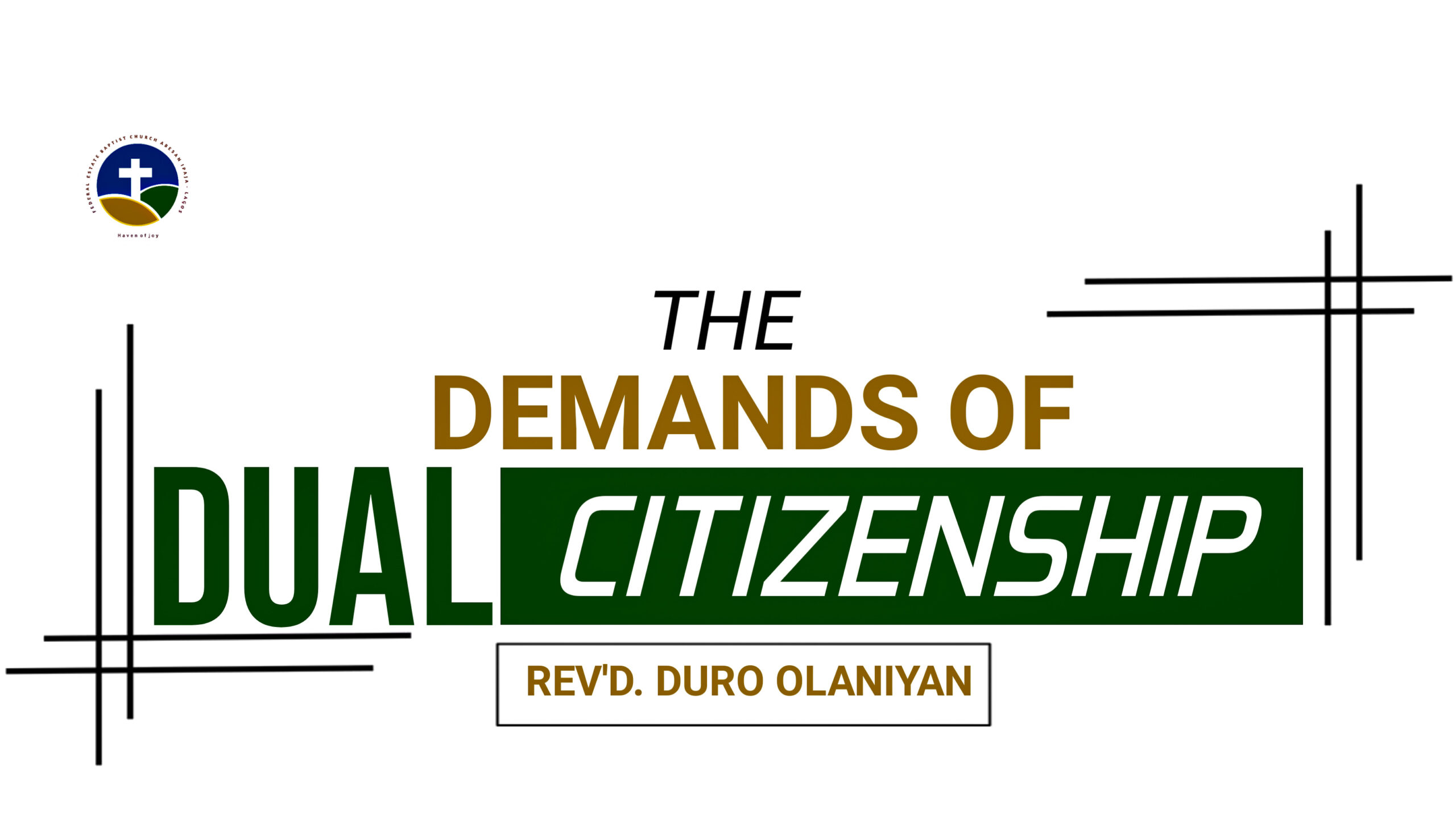
Our Guest Minister, Rev’d Duro Olaniyan fed us the good word of God on The Demands of Dual Citizenship.
Do enjoy the full sermon here.
Written by Olúwabùnmi Adéníji
Written by Kelani Omótóyòsí
Ṣé o ti ṣe àṣàrò rí bí àwọn ènìyàn tí wọ́n ní ju ẹ̀yà kan lọ ṣe máa ń se idọ́gba ìyàtọ̀ àṣà nínú ìgbé ayé wọn? Òótọ́ ni pé, wọ́n kan kọ́ bí wọ́n ṣe lè jẹ́ kí àwọn àṣà wọ̀nyí gbé pọ̀. Ó dà bí ẹni tí ó jẹ́ ọmọ orílẹ̀-èdè Ghana ní ìlànà, tí ó sì ń ṣiṣẹ́ ní Nàìjíríà ó máa ń darapọ̀ mọ́ ìgbé ayé ojoojúmọ́ ní Nàìjíríà, nígbà tí ó tún ń pa àṣà Ghana rẹ mọ́.
Jíjẹ́ Kristẹni ń ṣiṣẹ́ ní ọ̀nà kan náà. Bóyá ó tún le tesiwaju leekan si nípa fífi ìlú ibile ti ọ̀run tí a jẹ́ ara rẹ̀ ní ipa lórí ìle ayé wa. Fílípì ori keta, ese ogun jẹ́rìí fún wa pé a jẹ́ ará ìlú ibile ti ọ̀run, a sì mọ̀ pé pẹ̀lú jíjẹ́ ará ìlú kan wà pelu àwọn ojúṣe àti adehun.
Mímú àwọn ojúṣe àti àdéhùn wa sí Ọlọ́run ṣẹ jẹ́ pàtàkì gẹ́gẹ́ bí mímú ojúṣe wa sí orílẹ̀-èdè wa, Nàìjíríà ṣẹ. Ó sì ṣe pàtàkì kí a tún máa fi ìtàn náà hàn nínú ìgbé ayé wa lojoojúmọ́. Ìdí nìyẹn tí Bíbélì fi sọ nínú Jẹ́nẹ́sísì ori kini ese ketadinlogbon pé: “Nítorí náà, Ọlọ́run dá ènìyàn ní àwòrán tirẹ̀; ní àwòrán Ọlọ́run ló dá wọn; akọ àti abo ló dá wọn.” Nígbà tí a bá ń gbé ìdánimọ̀ ọ̀run wa jáde, a ń rìn káàkiri bí ẹni tí ń kede àwòrán Ọlọ́run. Nígbà tí a bá ní ìdààmú tàbí a bá dàrú nípa ipò kan, ìdánimọ̀ wa gẹ́gẹ́ bí Kristẹni máa fún wa ní ọgbọ́n bí a ṣe lè darí ara wa kọjá rẹ̀.
Nje ó ti ṣẹlẹ̀ rí pé o wà nínú ìyapa láàárín san ìdámẹ́wàá rẹ àti owó-ori, tí o sì pinnu láti fi ọ̀kan sílẹ̀ kí o lè san èkejì? Nínú iwe Mátíù ori ketadinlogun, Jésù náà rí ara Rẹ̀ nínú ipò tí ó fẹrẹ̀ jọ bẹ́ẹ̀, ṣùgbọ́n kò dín ìlànà kù rárá. Lu àyà rẹ kí o sì sọ pé, “Bí Jésù bá lè ṣe é, èmi náà lè ṣe é.”
Ìbéèrè àti ojúṣe wà nínú ìlú-mejì (dual citizenship), àti bí ó tilẹ̀ jẹ́ pé àyè wà fún ìmúlòsíwájú, àyè tún wà fún ìrònúpìwàdà. Gẹ́gẹ́ bí Jésù ṣe fi ara rẹ̀ hàn fún àwọn ọmọ-ẹ̀yìn rẹ̀, bẹ́ẹ̀ ni Ẹ̀mí Mímọ́ se afihan gbogbo ohun fún wa. Ki a rin pẹ̀lú Ẹ̀mí Mímọ́ jẹ́ kí o mọ ara rẹ dáadáa, ó sì ń ràn ọ́ lọ́wọ́ láti di ará ìlú tí ó dára jù lọ.
Wo ara rẹ nínú ìmọ́lẹ̀ Jésù, kí o sì mu awon ipo na pelu ọgbọ́n, kí o di ará ìlú tí ó dára jùlọ nínú ìjọba Ọlọ́run.
Olubasoro Alejò wa, Alufa Duro Olaniyan, fún wa ní Ọ̀rọ̀ rere Ọlọ́run lórí Àwọn ohun Ìbéèrè Fun Jije Omo Ilu Méjì.
E wo iwasu lekun rere nibi.
Written by Kelani Omótóyòsí
1 Comment
Blessing Oyenike
March 16, 2026If Jesus can…I can💪